


Steel Props: Why Prices Vary So Much — And How to Judge Quality
Two adjustable steel props can look almost identical on the outside. Same height range. Same tube diameter. Same galvanized shine. Yet one costs 30% less than the other. Why?
The difference isn't what you see on the surface. It's what the manufacturer decided to do — or not do — to reach that price. From wall thickness tolerance to zinc purity to whether the base plate was truly welded through, every shortcut reduces cost at the expense of safety and lifespan.
This guide breaks down the six factors that determine Steel Shoring System quality and price, so you can compare quotations like an engineer — not just a buyer.
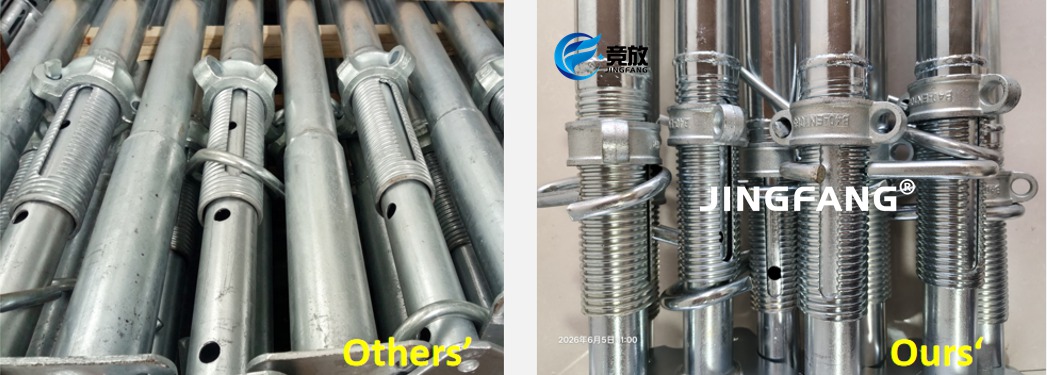
1. Wall Thickness and Negative Tolerance
Wall thickness is the single largest material cost in a steel prop. A small reduction in steel thickness creates a big saving for the manufacturer — and a big risk for you.
Some manufacturers quote a wall thickness of 2.0 mm but deliver 1.8 mm. This is called negative tolerance: the actual product is consistently thinner than the stated specification. Less steel means lower cost, but also lower load-bearing capacity.
How to check: ask for the exact thickness tolerance in writing. Reputable suppliers will state a clear value, such as ±0.1 mm. If a supplier avoids giving a precise tolerance, assume the real number is lower than what you have been told.
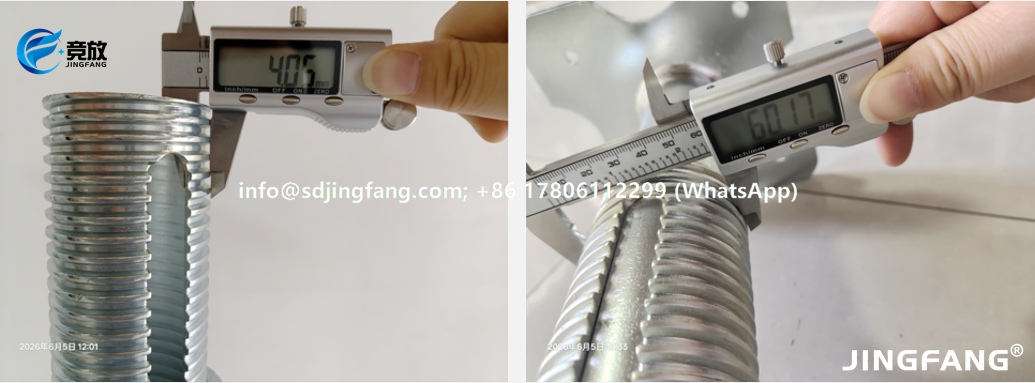
2. Steel Source: New Steel vs. Recycled or Pre-Galvanized Tube
Not all steel is the same. Three practices explain most quality problems in cheap props:
Recycled steel. Old pipes, scrap tubes, and waste steel are melted down and re-rolled. The result often contains impurities, inconsistent strength, and hidden internal cracks. It looks fine on the outside. It fails under load.
Pre-galvanized tube. Some manufacturers buy steel tube that was already galvanized at the mill. They cut it, weld it, and then spray a thin coat over the weld seams. But the zinc layer is destroyed at every cut and weld joint. Those areas are bare steel — and bare steel rusts.
Post-weld galvanizing. The correct method is to weld the prop first, then galvanize the entire assembled unit. This ensures every weld, inside and out, receives full zinc protection. No bare steel. No rust starting at the joints.
How to check: inspect the weld areas. If the weld color is different from the tube body, or if you can scrape off a thin coating to reveal dark steel underneath, the prop was made from pre-galvanized tube or received only a superficial touch-up.
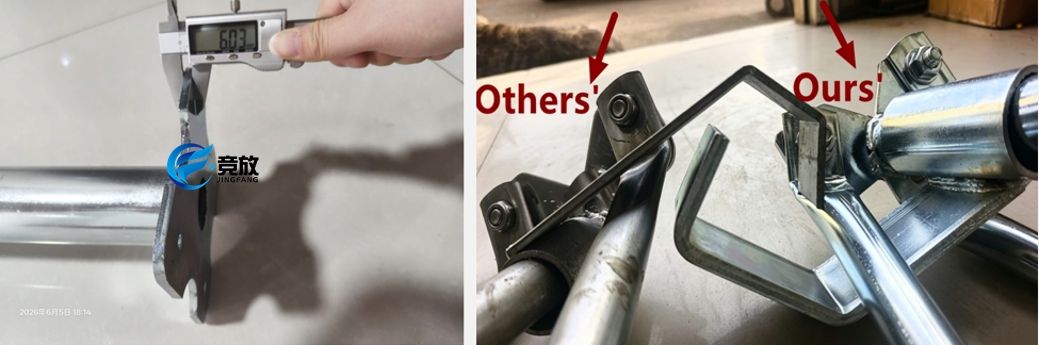
3. Zinc Plating: Alkaline vs. Acidic, and Zinc Purity
Corrosion resistance depends on two things: the plating process and the purity of the zinc bath.
Many low-cost props use acidic zinc plating. It's cheap and fast, but the coating is loose and porous. In neutral salt spray testing (NSS), acidic zinc plated parts often fail within 24 hours. In real outdoor conditions, they begin to tarnish and rust within months.
Higher-quality props use alkaline zinc plating. This process produces a dense, bright coating that withstands 72+ hours of NSS testing.
But even alkaline plating can be undermined if the zinc bath itself is impure. Some manufacturers dilute the bath with cheap aluminum. Their zinc content falls below 30% while aluminum rises above 70%. That is no longer zinc plating — it's aluminum with a trace of zinc. The result: a coating that looks shiny at first, then turns dull and dark quickly.
A quality zinc bath contains 70% or more pure zinc. Ask for the zinc purity ratio and the NSS test report. A supplier who cannot provide both is hiding something.
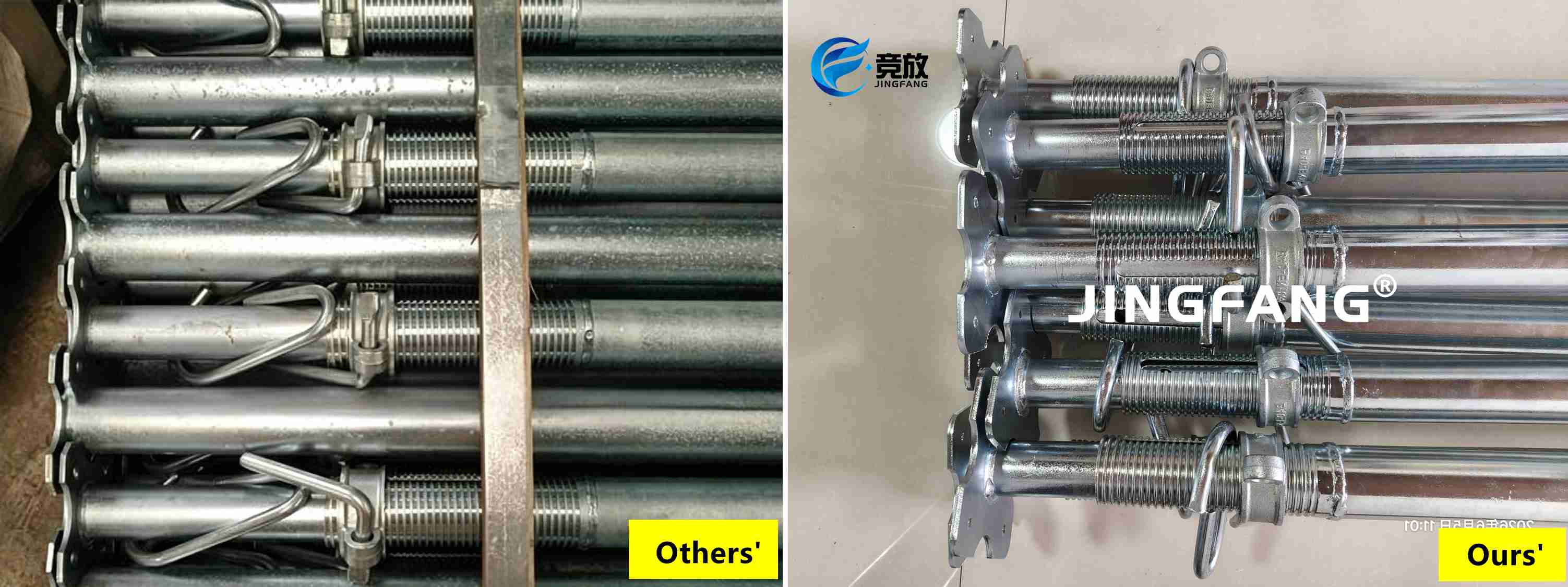
4. Welding: Full Penetration vs. Surface Welding
The base plate is where the entire load of the prop transfers to the ground. It is the most critical welded joint on the product.
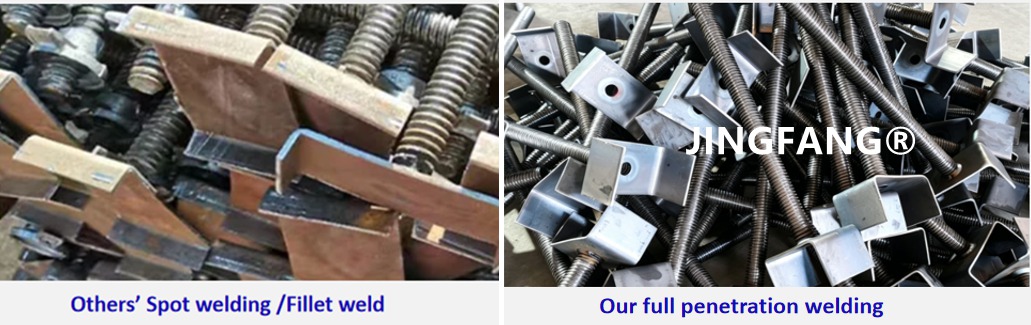
Cheap manufacturing uses surface welding — the weld metal sits on top of the joint without penetrating deep into the base metal. It looks connected. Under heavy load, it cracks from the inside, where no one can see it.
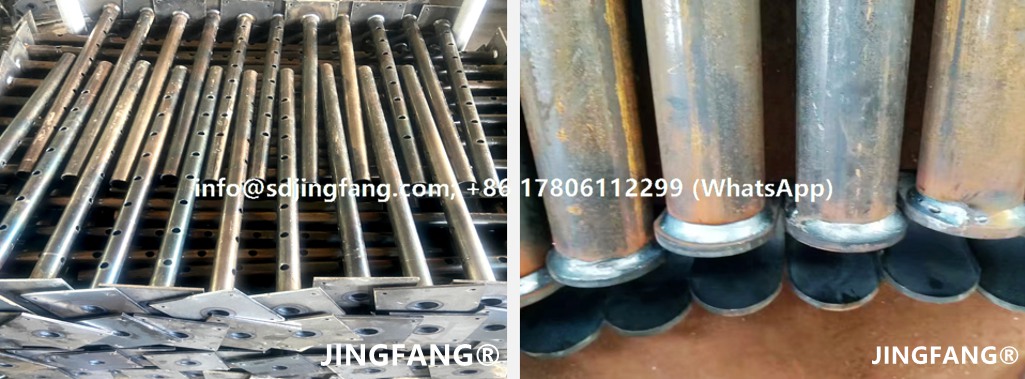
Quality manufacturing uses full penetration welding. The welding wire and the base metal are fully melted and fused into a single piece. The weld depth reaches 100% of the plate thickness. The joint is stronger than the plate itself.
Another detail: the fork head joint. Inferior suppliers often grind the weld down to make it look smooth. In many cases, this is done to hide weak or inconsistent welds. A properly welded fork head will show a slightly raised, uniform weld bead. This is the visible proof that the joint was fully filled.
How to check: ask the supplier whether the base plate is full penetration welded, and whether the fork head weld is left unground. If they talk about "smooth finish" but cannot show weld depth, be careful.
5. Hardware Grade: Nuts, Pins, and Tube Diameter
The tube is important, but small components decide whether the system holds together.
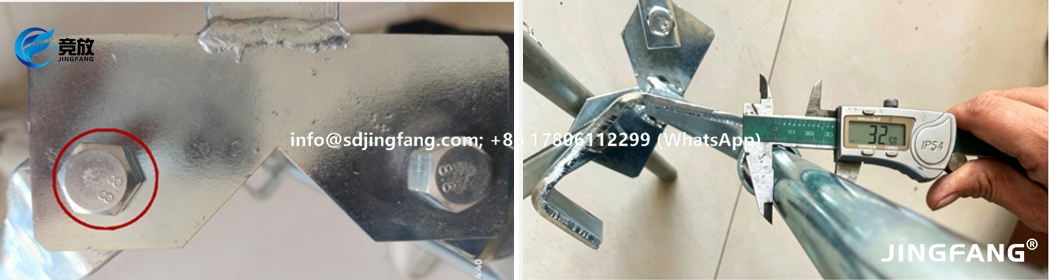
Nuts. Grade 4.8 nuts cost about half as much as Grade 8.8 nuts. They also strip, deform, and fail under heavy or repeated loading. Grade 8.8 nuts have a tensile strength of 800 MPa and a yield strength of 640 MPa — twice the strength of Grade 4.8. On a tripod or jack, this is not a luxury; it's a safety requirement.
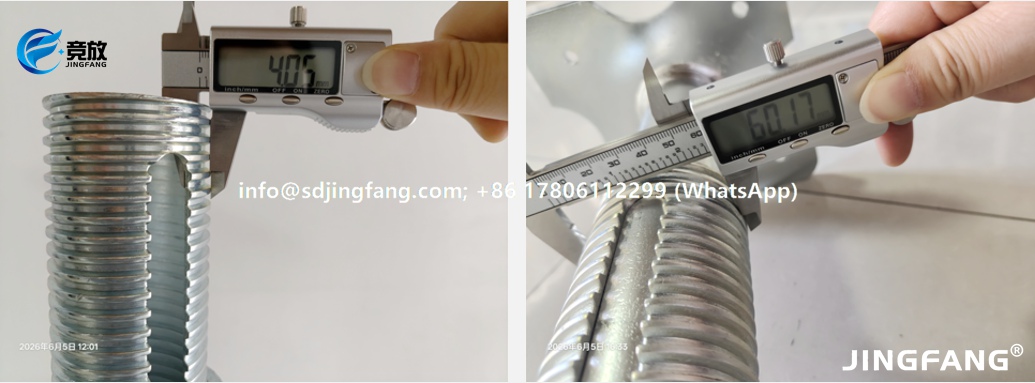
Tube diameter. Some manufacturers reduce the inner tube diameter from 32 mm to 28 mm to save steel. The result is lower stiffness and reduced load capacity. The difference may not be visible on a quotation, but it is visible on a caliper.
Pins and clips. These are often ignored, but a cheap pin that bends under shear load can cause the entire prop to lose position during a pour.
How to check: look at the markings on the nut face. Grade 8.8 nuts carry a clear "8" stamp. Grade 4.8 carry "4" or "04". Measure the tube diameter with a caliper. These checks take minutes and eliminate the weakest suppliers.
6. Tolerance Control and Consistency
A good prop isn't just well designed. It's produced with consistent accuracy batch after batch.
Some factories operate with wide tolerances because they mix materials from different sources. Wall thickness may vary from 1.8 mm to 2.2 mm across one container. Weight per piece may fluctuate by several percent. This inconsistency means unpredictable performance — and unpredictable failure points.
Strict manufacturers control wall thickness to ±0.1 mm and weight to ±0.1%. They can do this because they use consistent raw material and maintain disciplined production processes.
How to check: ask for a tolerance specification sheet. Then verify with your own measurements during inspection. If the supplier cannot provide a tolerance sheet, they are probably not controlling their process.
The Short Checklist for Buyers
Before you place an order, ask your supplier these six questions:
What is the exact wall thickness tolerance? Is it written down?
Do you use new steel or recycled steel? Do you use pre-galvanized tube?
Is the zinc plating alkaline or acidic? What is the zinc content of the bath? Can you provide an NSS test report?
Is the base plate full penetration welded? Is the fork head weld left unground?
What grade are the nuts? What is the inner tube diameter?
Do you have a written tolerance specification for thickness and weight?
If the supplier answers all six clearly and provides documents, you are working with a serious manufacturer. If they hesitate, the lower price is not worth the risk.
The JINGFANG Standard
At Linyi Jingfang Engineering Materials, we manufacture adjustable steel props to a clear and documented standard:
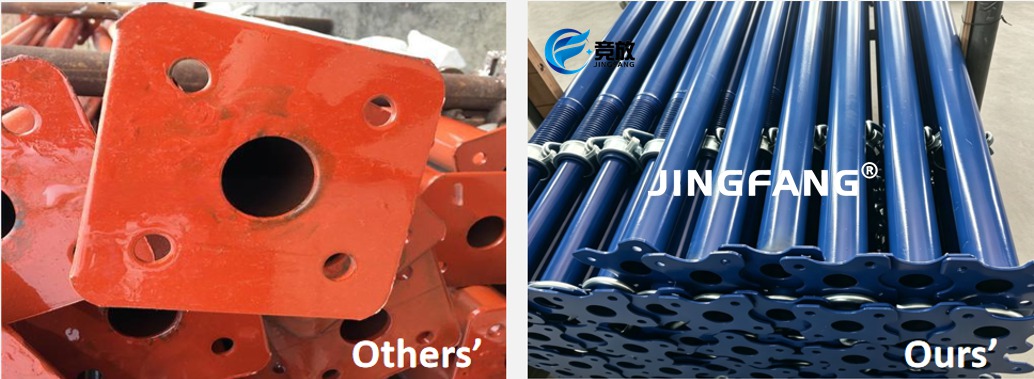
Post-weld galvanizing — no pre-galvanized tube, full zinc coverage on all welds
Alkaline zinc plating with ≥70% pure zinc bath, NSS tested 72+ hours
Full penetration welding on every base plate, visible unground weld bead
Grade 8.8 nuts and 32 mm+ inner tube diameter
Strict tolerance control — wall thickness ±0.1 mm, weight ±0.1%
EN 1065:1998 tested by SGS across multiple heights
We publish these specifications because we want buyers to compare us against anyone else. The cheapest prop on the market will never match the one that was built to survive.
If you are sourcing steel props for your next project, send us your required heights, diameters, and quantities. We will respond with a complete quotation — and the test reports to back it up.
Linyi Jingfang Engineering Materials Co., Ltd.
🌐 www.sdjingfang.com
📧 info@sdjingfang.com
📞 +86 178 0611 2299