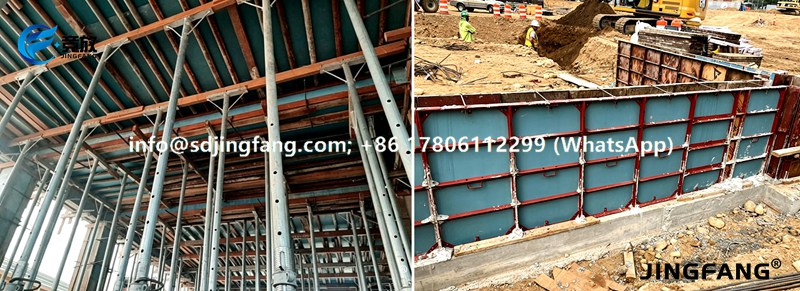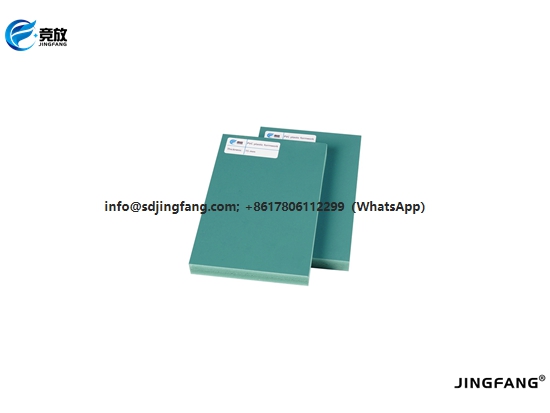
Wholesale Reusable PVC Formwork | 50+ Reuses, 100% Virgin UPVC
| Trademark/Brand: | JINGFANG® Wholesale Reusable PVC Formwork | 50+ Reuses, 100% Virgin UPVC |
| Raw material: | UPVC (also named Plastic-Steel PVC) |
| Width: | up to 1300 mm available |
| Length: | no limits, can be customized |
| Thickness: | 6 – 21 mm available |
| Density: | 700kg/m³±1% (standard), and the 600~900kg/m³ can be customized. |
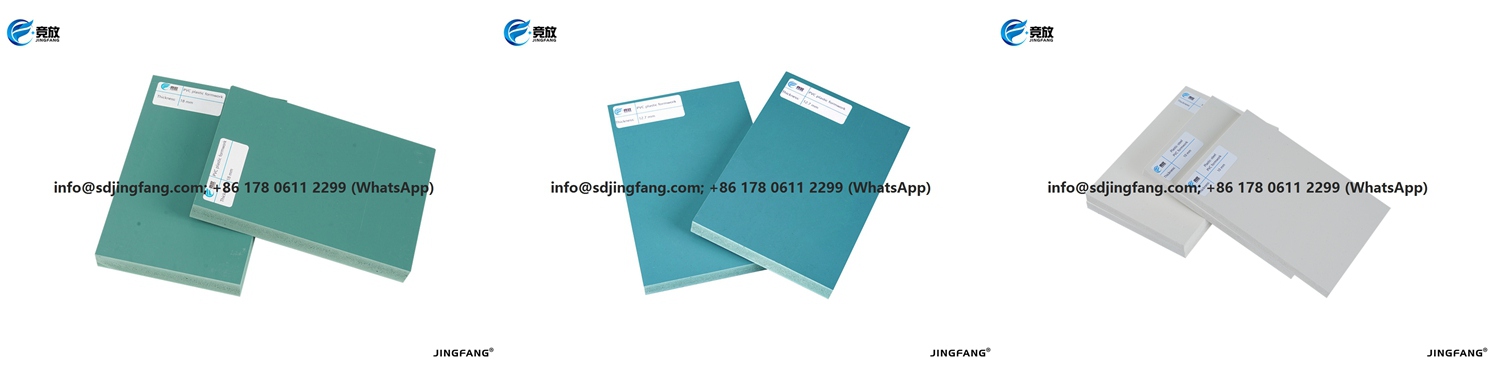
| Color: | Turquoise Green / Azure Blue, others customizable |
| Loading & Packing: | in bulk or with pallets |
| FOB Port: | Qingdao, Lianyungang, Tianjin, Shanghai, etc. |
| Export Transportation: | FCL/LCL by sea, road or railway |
Definition: What is Reusable PVC Formwork?
A new generation of concrete formwork — engineered to outperform plywood, built to last 50+ pours.
JINGFANG® UPVC Plastic Formwork is a new type of reusable formwork panel , using "Virgin & Pure UPVC" as the solo main raw material which accounts for more than 95% (the rest 4~5% is for necessary additives), is designed to replace traditional plywood in concrete construction.
It has the same dimensions and applications as standard plywood formwork — but delivers significantly better performance.
Unlike plywood, which typically lasts 6–10 pours before degrading, JINGFANG® UPVC Plastic Forwork reliably achieves 50+ reuses in timber frame structures, and more in steel frame systems with proper edge protection.
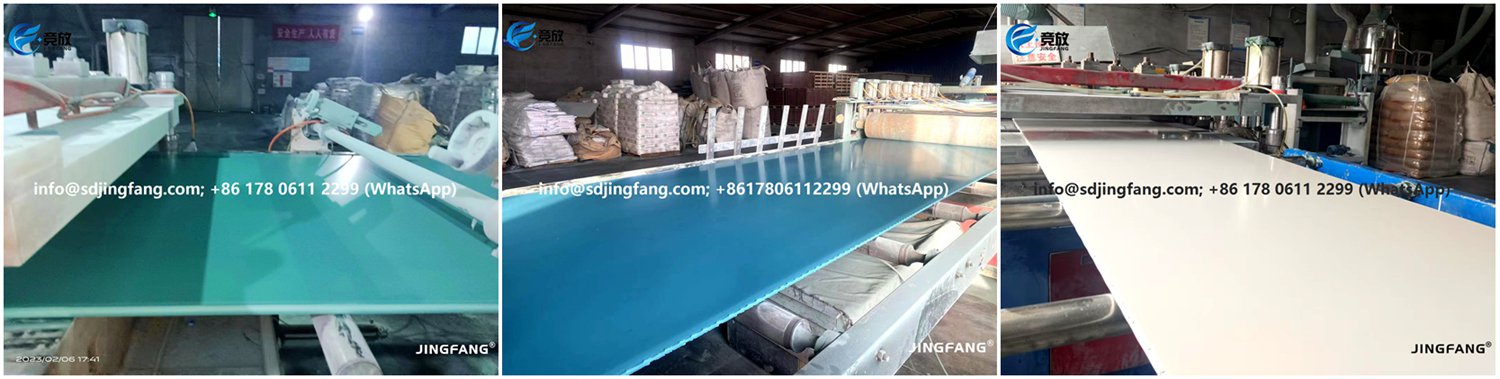
Parameter & Specification
| Product name: | Reusable PVC Formwork |
| Raw Material: | 100% Virgin UPVC |
| Thickness: | 6mm – 21m |
| Width: | Up to 1300mm |
| Length: | Unlimited |
| Popular dimension: | 4' x 8' (1220mm x 2440mm) |
| Popular Thickness: | 12/15/18m |
| Density: | 700 kg/m³ (standard); 600–900 kg/m³ customizable |
| Standard Colors: | Turquoise Green / Azure Blue |
| Custom Colors: | White, Yellow, Black, Grey, or upon request |
| Reuses: | 50+ (timber frame); more with steel frame and edge protection |
What is UPVC
UPVC stands for Unplasticized Polyvinyl Chloride — also known as PVC-U or rigid PVC. Unlike general-purpose PVC, UPVC is manufactured without plasticizers, which are softening agents that make PVC flexible but weak.
The "Three-No-Addition" Principle: UPVC strictly adheres to the following manufacturing standards:
⚫️ No plasticizers
⚫️ No heavy metal stabilizers
⚫️ No calcium carbonate fillers
By removing plasticizers, UPVC retains a rigid molecular chain structure. This results in:
✅️ Higher strength — can withstand concrete pouring pressure without deflection
✅️ Better UV resistance — won't degrade or discolor under prolonged sun exposure
✅️ Greater temperature resistance — remains stable from -25℃ to +70℃
✅️ Over 4× better outdoor anti-aging performance than general PVC
Industry consensus: Over a decade of real-world use has proven UPVC to be the most qualified and optimal raw material for plastic formwork. This is a well-established fact acknowledged by almost all manufacturers in the industry.
💡 A Critical Distinction — Not All White PVC is UPVC
White PVC resin and virgin UPVC are two different raw materials.
PVC resin — commonly used in WPC foam boards, advertising panels, and furniture — lacks the structural strength required for formwork. Virgin & Pure UPVC is the only qualified choice.
Some suppliers exploit this confusion. They blend PVC resin with excess calcium powder and recycled PVC/PP/ABS to cut costs, producing panels that look similar but fail quickly under real job site conditions.
A simple rule:
If a supplier denies the difference between PVC resin and UPVC, or avoids the topic altogether, it means they are not using — and likely have never used — qualified UPVC. It's like a stainless steel manufacturer who doesn't know what stainless steel is.
Don't judge raw material by color alone. Ask what's inside.

Why Choose UPVC Over Plywood?
For decades, plywood has been the default formwork material. But it comes with limitations: it absorbs water, delaminates, requires release oil, and wears out quickly. UPVC formwork solves all of these problems.
| Performance | Plywood Formwork | Reusable PVC Formwork |
| Reuses: | 6–10 pours | 50+ pours |
| Water Resistance: | Absorbs water, swells, delaminates | 100% waterproof, no swelling |
Release Oil: | Required before every pour | Not needed — natural non-stick surface |
UV Resistance: | Degrades under sun | No warping or discoloration |
| Temperature Range: | Warps in heat, freezes in cold | Stable from -25℃ to +70℃ |
Nail Holding: | Moderate, weakens when wet | Excellent, consistent in all conditions |
End-of-Life: | Waste — disposal cost | 100% Recyclable — higher recycle benefits |
Cost Per Pour: | Low upfront, high per-pour | Higher upfront, much lower per-pour |
The Math: | 1/8pours=0.125per pour | 1/50pours=0.02 per pour |